Automated People Mover Expert Witness (Plane Trains & Trams)

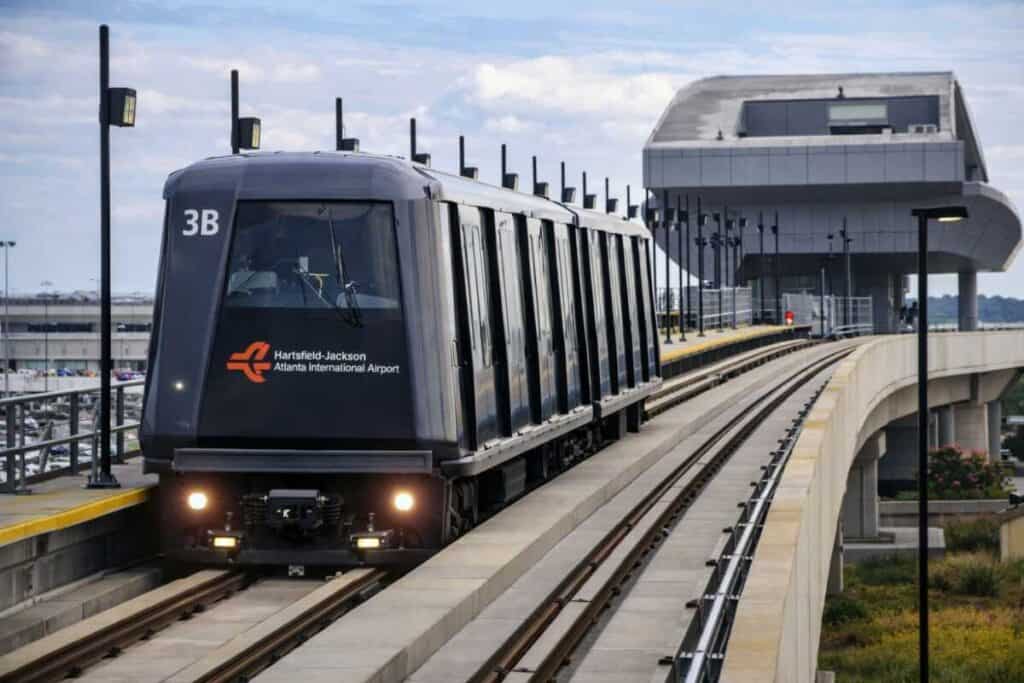
Over my 40 plus year career in the transportation industry, I have analyzed automated transit systems, including driverless passenger shuttles at major airports around the world.
These systems go by many names. You may encounter them as automated people movers, APMs, plane trains, airport trams, inter-terminal connectors, or airport people movers.
The technology is the same regardless of the name. So are the governing standards, primarily ANSI/ASCE/T&DI 21-21, APTA APM recommended practices, and manufacturer specifications, and so are the litigation issues that arise when something goes wrong.
I provide independent technical analysis as an automated people mover expert witness for attorneys handling airport APM, plane train, and airport tram litigation, for both plaintiff and defense counsel.
I provide independent technical analysis as an automated people mover expert witness for attorneys handling airport APM, plane train, and airport tram litigation, for both plaintiff and defense counsel.
My experience includes a direct operational and compatibility assessment of the Hartsfield-Jackson Atlanta International Airport Plane Train system, conducted on behalf of the City of Atlanta with full authorized access to vehicle systems, maintenance programs, and safety management practices.
Despite their enclosed and controlled airport setting, these systems generate serious passenger injury litigation.
They also occupy an unusual regulatory position that most attorneys and many transit practitioners do not fully understand. That regulatory gap directly affects how standard of care is established, what documents need to be obtained in discovery, and how liability and causation arguments are built.
Understanding it from the outset is not optional in these cases. It is the foundation of the analysis.
Automated People Mover Systems and Airport Train Litigation
Driverless Fixed Guideway Operations
Automated people movers are driverless vehicles operating on fixed guideways under automatic train control. There is no operator on board. Speed, stopping, door operations, and system responses to faults are all managed by onboard computers and wayside control systems working in combination.
That absence of a human operator is what makes these systems technically and legally distinct from conventional transit.
When something goes wrong, accountability does not run to an operator who made a bad decision. It runs to system design, software performance, maintenance programs, inspection histories, and the agency’s own safety obligations.
That shift changes the entire analytical framework, and it is one of the reasons these cases require a specialist.
Systems Commonly Called Plane Trains
Many airport automated people movers are informally called plane trains, and attorneys searching for expert assistance after an airport incident often use that term rather than the formal designation.
The Hartsfield-Jackson Atlanta Airport system is among the best known examples, connecting concourses beneath the airfield and carrying more passengers annually than many urban rail systems.
Others are called airport trams, inter-terminal connectors, or simply airport shuttles depending on the operator and the facility. Despite the informal names, these are complex automated rail systems governed by specialized engineering standards and operating under safety obligations that are specific to their technology and environment.
Whatever the system is called at the airport in question, if it is a driverless passenger shuttle on a fixed guideway, it falls within the scope of my practice.
Where These Systems Operate
APM systems are found at major domestic and international airports, where they connect terminals, concourses, and remote gates.
They also operate as the shuttle systems that connect terminal buildings to off-site consolidated rental car centers, the large facilities where all the rental car companies are housed under one roof away from the main terminal.
Tampa International Airport, which opened the world’s first airport automated people mover system in 1971, operates multiple rubber-tired driverless people mover lines serving both its airside concourses and its rental car and parking connector.
Atlanta’s Hartsfield-Jackson, home to the Plane Train, one of the world’s most heavily traveled airport people movers, uses the same technology lineage that traces directly back to the original systems at Tampa.
Other airports where well-known automated people mover systems operate include Dallas/Fort Worth, Orlando International, Las Vegas Harry Reid International, Miami International, and Denver International, among many others.
My experience covers the principal automated people mover system types and operating environments found across the United States.
Key System Components in APM Litigation
Understanding where liability can arise in an APM case requires genuine familiarity with how these systems are built and how they function. The following components appear most frequently in litigation.
Vehicles and Automatic Train Control
APM vehicles operate as automated consists, meaning sets of cars coupled together and controlled as a single unit. Onboard computers manage acceleration, braking, and door operations in coordination with wayside control systems located along the guideway.
Automatic train protection systems provide a safety overlay that governs maximum speeds and enforces stopping at stations.
Train control system performance, its maintenance history, and its event and fault logs are central evidence in many APM cases.
When a system stops unexpectedly, overshoots a platform, fails to hold a station stop, triggers an emergency brake application, or experiences a door system fault, each event is captured in the control system record, and that record is where my analysis begins.
Platform Screen Doors and Vehicle Door Interlock Systems
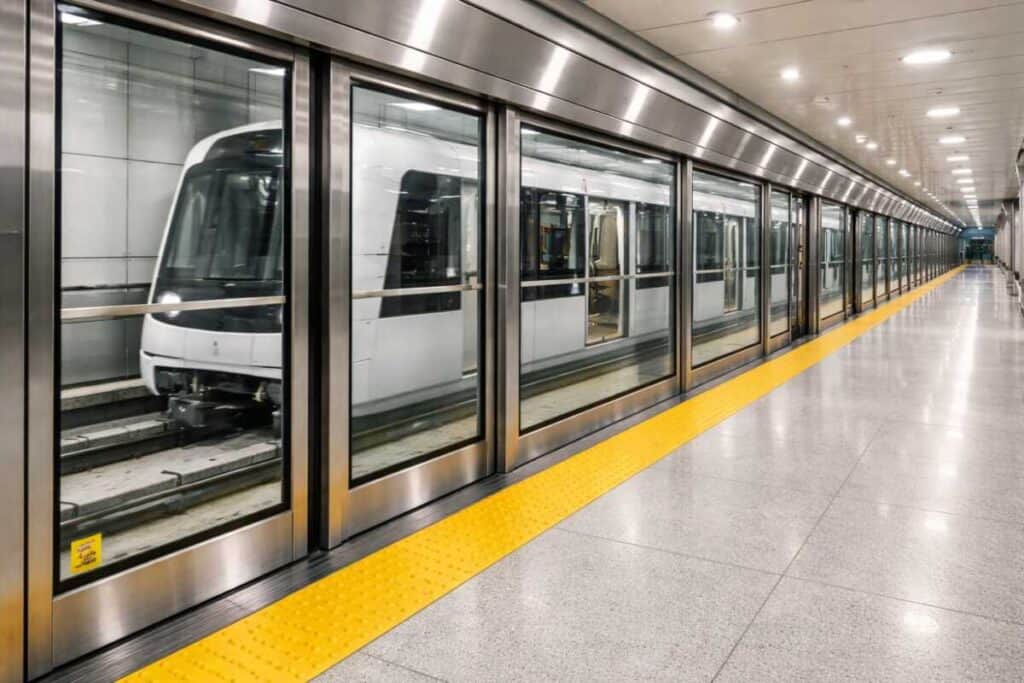
Platform screen doors are the full-height or partial-height barrier doors that line the station edge. They open only when a train is correctly docked at the platform and the control system has authorized the door sequence.
Vehicle doors and platform screen doors operate in coordination through an interlock system, meaning neither set of doors should open unless the other is in the correct position and the train is properly stopped.
In practice, interlock systems require precise calibration, regular maintenance, and consistent inspection to perform reliably.
Door entrapment, door strike, and gap incidents are among the most frequent sources of passenger injury in APM litigation, and the maintenance and calibration records for these systems are among the first things I request.
Guideway and Civil Infrastructure
The physical trackway, switching systems, guideway structure, and maintenance access provisions form the infrastructure backbone of an APM system.
Because most APM vehicles are rubber-tired and guided by a dedicated guide rail or guide bar system rather than a conventional steel wheel and rail interface, the infrastructure failure modes are different from traditional rail.
Guideway surface condition, guide rail integrity, and switch mechanism reliability are the relevant concerns, along with the structural condition of elevated guideway sections.
Whether required inspections and maintenance were completed on schedule, and whether the as-built condition of the guideway matched its design specifications, are standard lines of inquiry in infrastructure related APM cases.
Station Design and Passenger Interface
Platform edge conditions, warning tactile strips, the gap between the vehicle and the platform edge, signage, passenger information systems, emergency communication provisions, and egress design are all elements of station design that appear in APM injury litigation.
Gap geometry is specifically addressed in ANSI/ASCE/T&DI 21-21, and the comparison between as-built measurements and the standard’s requirements is a routine part of platform edge fall and entrapment case analysis.
Station design deficiencies that have been identified in prior inspections but not corrected are particularly significant evidence.
Common Accident Scenarios in APM and Plane Train Litigation
Door Entrapment and Strike Incidents
Passengers struck by closing vehicle doors or platform screen doors, or entrapped in the door closing sequence, represent one of the most frequently litigated categories of APM injury.
Door sensing technology varies considerably across system generations and manufacturers. Older systems may use pressure-sensitive edges that require physical contact before reversing.
Newer systems may use infrared or optical sensing with faster response characteristics. The specific sensing technology installed, its maintenance history, its calibration records, and any documented prior malfunctions are all material evidence.
I examine door event logs, sensor test records, and prior incident reports at the same location as standard elements of door entrapment case analysis.
Platform Edge Falls and Gap Incidents
Falls into the gap between the vehicle floor and the platform edge, falls on the platform during boarding and alighting, and incidents involving platform screen door malfunctions are a consistent source of claims in APM litigation.
Gap geometry is governed by ANSI/ASCE/T&DI 21-21 and by the manufacturer’s design specifications. The standard specifies dimensional requirements for the gap between the vehicle and the platform edge, and I compare as-built measurements against those requirements and against the original design specifications as a routine part of platform edge case analysis.
Where a gap has widened over time due to track wear or component degradation, the inspection history and the agency’s response to that condition become central to the liability analysis.
Sudden Stops and In-Vehicle Passenger Injuries
Unscheduled stops and emergency brake applications cause standing passengers to fall, often in confined vehicle spaces with limited warning and handhold provision.
These events may result from control system faults, wayside equipment failures, obstacle detection activations, or communication failures between vehicle and wayside systems.
I examine the train control event log and fault history to determine what triggered the stop, whether the system performed as designed, and whether the agency’s maintenance program had identified any relevant precursor conditions.
Passenger warning systems and the adequacy of handhold and stanchion provision are also reviewed.
Emergency Evacuation Incidents
When an APM train stops in a guideway or tunnel environment and cannot be moved, passengers must be evacuated on foot through a guideway that may not have been designed for pedestrian use.
Evacuation incidents generate injury claims involving falls on guideway surfaces, injuries during passenger transfer between vehicles, inadequate emergency lighting, and failures of staff response.
I evaluate the adequacy of the emergency procedures in place, whether staff were trained to execute them, how quickly the response was initiated, what the passengers were told and when, and whether the physical provisions for emergency egress met the requirements of ANSI/ASCE/T&DI 21-21 and the agency’s own safety program.
Maintenance and System Failure Cases
Cases arising from deferred maintenance, failed components, inadequate inspection intervals, and departures from manufacturer maintenance specifications are among the most technically complex in APM litigation.
Maintenance documentation in these cases is often the most revealing evidence available. I look for the gap between what the manufacturer’s maintenance manual required, what the operating contract obligated the maintainer to perform, and what the maintenance records show was actually done.
Prior defect notices, corrective maintenance work orders, and any waivers or deferrals of required maintenance are particularly significant.
In contracted APM operations, I also examine the operating and maintenance contract itself. These contracts typically require the contractor to maintain sufficient spare parts inventory and tie management compensation to system availability performance metrics, meaning the contractor is paid more when the system runs on time and at the required capacity, and less when it does not.
That financial structure creates a direct incentive to keep vehicles in service.
Where records reflect that safety-related components were unavailable and vehicles were returned to service under monitoring pending parts availability, the question of whether that return-to-service decision was made in accordance with the contract and with accepted safety management practice becomes a central issue in the analysis.
Where a component that failed had a documented history of defects or prior incidents, that record is central to the causation and liability analysis.
The Regulatory Framework for Automated People Mover Systems
The Regulatory Gap Attorneys Need to Understand
This is the aspect of APM litigation that most frequently surprises attorneys who handle conventional transit cases, and understanding it early is essential to building the right case strategy.
The regulatory structure applicable to an APM system depends on how it is classified and funded. When an APM system receives Federal Transit Administration funding and is classified as public transportation, it falls under FTA State Safety Oversight requirements, including a mandated Public Transportation Agency Safety Plan, independent safety audits, and formal corrective action tracking.
When an APM system operates as internal airport infrastructure within a Part 139 certificated airport and is not classified as public transportation, it falls instead under the Federal Aviation Administration’s airport certification framework.
The FAA regulates the airport as an aviation facility. It does not regulate the train system as a transit agency in the way the FTA regulates light rail or subway systems. Some states have enacted their own APM-specific safety requirements. Many have not.
They also fall outside Federal Railroad Administration authority. The FAA has a substantial presence in the airport environment but does not regulate the train systems themselves in any substantive way. Some states have enacted their own APM-specific safety requirements. Many have not.
The result is that many APM systems, including some carrying very large passenger volumes through major international airports every day, operate under a safety framework that is largely self-defined.
There is no state safety oversight agency reviewing their safety plans, auditing their maintenance programs, or investigating their incidents the way a State Safety Oversight agency does for a light rail system.
That absence does not reduce the agency’s safety obligations. It means those obligations are found in different documents, and knowing which documents to request is a significant part of what I bring to APM cases.
ANSI/ASCE/T&DI 21-21 and APTA APM Standards
The foundational engineering and safety standard for automated people mover systems is ANSI/ASCE/T&DI 21-21, published by the American Society of Civil Engineers.
It covers guideway design, vehicle performance, door systems, station safety, gap geometry, and emergency procedures. NFPA 130, the standard for fixed guideway transit and passenger rail systems, also applies to certain APM system design and life safety requirements.
The standard itself is not what I am looking for in discovery. What I am looking for is evidence of whether the system was actually designed, built, operated, and maintained in conformance with it.
That evidence lives in the agency’s procurement specifications, design documents, maintenance manuals, inspection records, and the operating contract.
Knowing which of those documents to request, and knowing how to read them against the standard’s requirements, is what separates specialist APM expert analysis from general transit expertise.
The Agency Safety Plan and Operating Contract
Every airport authority operating an automated people mover system maintains some form of written safety program, whether it is titled a System Safety Program Plan, a Public Transportation Agency Safety Plan, or an internal safety management document developed specifically for that airport authority.
That safety program, together with the operating and maintenance contract for the system, establishes the specific safety, inspection, and maintenance obligations governing that system. These documents typically incorporate applicable engineering standards such as ANSI/ASCE/T&DI 21-21, manufacturer specifications, and in some cases APTA operational guidance.
In litigation involving APM systems, the most important technical analysis often lies in the difference between what those governing documents required and what the operational and maintenance records show actually occurred.
What I Examine in APM and Plane Train Cases
Every APM case is shaped by its own facts, but the following categories of evidence are relevant across the full range of automated people mover litigation.
I begin with the train control system event logs and fault records, which document every system state, fault condition, door operation, speed variation, and emergency stop in the period surrounding the incident.
These records often tell a more complete story than any witness account.
Platform screen door and vehicle door maintenance records, sensor calibration histories, and door event logs establish whether the door systems were performing within specification and whether any prior anomalies had been identified and addressed.
CCTV footage from stations and vehicles is reviewed carefully for what it shows and what it does not show, and I assess whether proper preservation steps were taken immediately after the incident.
Gap measurement records and as-built survey data are compared against ANSI/ASCE/T&DI 21-21 requirements and original design specifications.
Station inspection records, including any deficiencies noted and the agency’s response to them, are standard elements of platform edge and station design cases.
Emergency response records and staff training documentation establish whether the agency’s personnel were prepared to respond to the type of incident that occurred and whether the response met the agency’s own procedures.
Operating and maintenance contract compliance records and manufacturer maintenance manual adherence are examined in every maintenance-related case.
Prior incident and near-miss reports involving the same equipment, the same station, or the same system component are among the most significant evidence in APM litigation.
A pattern of prior incidents that the agency was aware of and did not adequately address is frequently central to both liability and damages analysis.
My Role as an Automated People Mover Expert Witness
Engagement begins with an initial case review. I evaluate the incident description, the available records, and the preliminary evidence to form an early assessment of the technical issues likely to matter in the case.
For APM matters this early assessment is particularly valuable because the records that are most important are often not the ones that are produced first, and identifying what is missing early allows counsel to pursue it before it becomes unavailable.
As the case develops I conduct detailed review of the technical evidence, including the control system records, door system maintenance documentation, inspection histories, CCTV footage, and any prior incident reports.
Where the physical condition of a platform, the geometry of a gap, the configuration of a door system, or the state of guideway infrastructure is material to the case, I may conduct site inspections.
Expert reports are prepared to meet applicable court requirements and are written to withstand rigorous cross-examination. I write to explain the evidence clearly and accurately, not to advocate for a result.
Rebuttal reports address the opinions of opposing experts, identifying methodological weaknesses, unsupported assumptions, and conclusions that are inconsistent with the technical record and the applicable standards.
Deposition support includes preparing counsel on the subject matter and providing expert deposition testimony where required. At trial I explain complex automated system issues clearly for attorneys, judges, and jurors who should not be expected to have engineering or operations expertise.
I work for plaintiff and defense counsel. My opinions follow the evidence and the applicable standards. They do not change based on who retained me.
Litigation Support for Attorneys Handling APM Cases
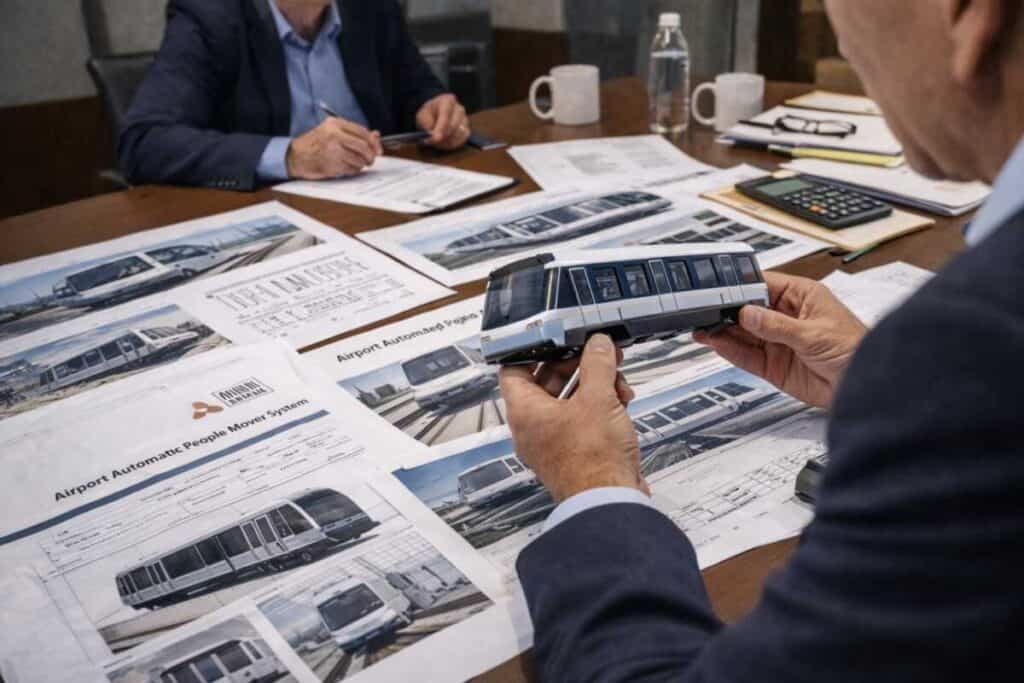
The attorneys who retain me early in APM cases consistently find it more valuable than waiting until expert disclosure deadlines approach.
The specialized nature of APM records means that counsel unfamiliar with these systems may not know what to request, may not recognize when produced records are incomplete, and may not identify the significance of documents that are missing entirely.
I help with all of that at the discovery stage, before the gaps become problems.
At the pre-litigation and early discovery stage I assist counsel in understanding APM-specific terminology and system operations, identifying the precise categories of records that should be sought, evaluating whether the agency’s conduct deviated from its own safety program and from the requirements of ANSI/ASCE/T&DI 21-21 and applicable APTA standards, and framing the technical questions that will drive liability and causation analysis.
As the case develops I review the opposing party’s expert report, prepare technically informed cross-examination questions, and ensure counsel is not surprised by engineering or operational arguments they are not positioned to challenge independently.
APM cases are technically specialized. The regulatory framework is unusual. The records are specific. The standards are not widely known outside this area. That is precisely where deep specialist experience makes a difference.
Related Transit Expert Witness Services
This page addresses automated people mover litigation specifically, covering airport APMs, plane trains, inter-terminal connectors, and CONRAC systems. For transit litigation involving other modes, I maintain dedicated pages covering the technical and operational issues particular to each system type.
The Transit Systems Expert Witness article is the main hub for all transit litigation matters and covers the full range of fixed-guideway and rubber-tired transit modes.
The Light Rail Systems Expert Witness article addresses grade crossing incidents, platform interface claims, signal system disputes, and the regulatory and operational standards specific to light rail, streetcar, and tram litigation.
The Transit Bus Systems Expert Witness article covers public transit bus operations, passenger injury claims, ADA compliance, operator conduct, and fleet maintenance issues.
Cases involving multiple transit modes, or where the classification of the system itself is in dispute, are addressed through the full scope of my transit systems experience.
Automated People Mover Expert Witness
Automated people mover litigation is technically demanding and regulatory unusual.
The systems are complex, the governing standards are specialized, and the documents that matter most are not always the ones that are produced without a specific and informed request.
An expert who knows these systems from the inside, who understands where the standard of care comes from when there is no conventional regulatory oversight, and who can explain that clearly to a court is not a luxury in these cases. It is a practical necessity.
I provide independent technical analysis as an automated people mover expert witness for attorneys handling airport APM, plane train, airport tram, and inter-terminal connector litigation.
My experience spans more than 40 years across multiple system types and operating environments. My analysis is evidence-based, my reports are prepared to withstand cross-examination, and my opinions do not shift based on which side has retained me.
I am available for initial case screening, expert report preparation, rebuttal analysis, deposition support, and trial testimony.
If you are evaluating expert retention for an APM or airport train matter, I welcome an initial conversation about the technical issues in your case.
All initial consultations are confidential. Contact National Transit Services, LLC to discuss your case.