I have spent more than 40 years working inside rail and transit systems, not studying them from the outside.
That experience covers operations, maintenance, safety management, systems design, and regulatory compliance across multiple transit modes and multiple agencies.
When something goes wrong in a transit system and litigation follows, I provide the independent technical analysis that attorneys, insurers, risk managers, and agencies need to understand what happened, why it happened, and whether the right standards were met.
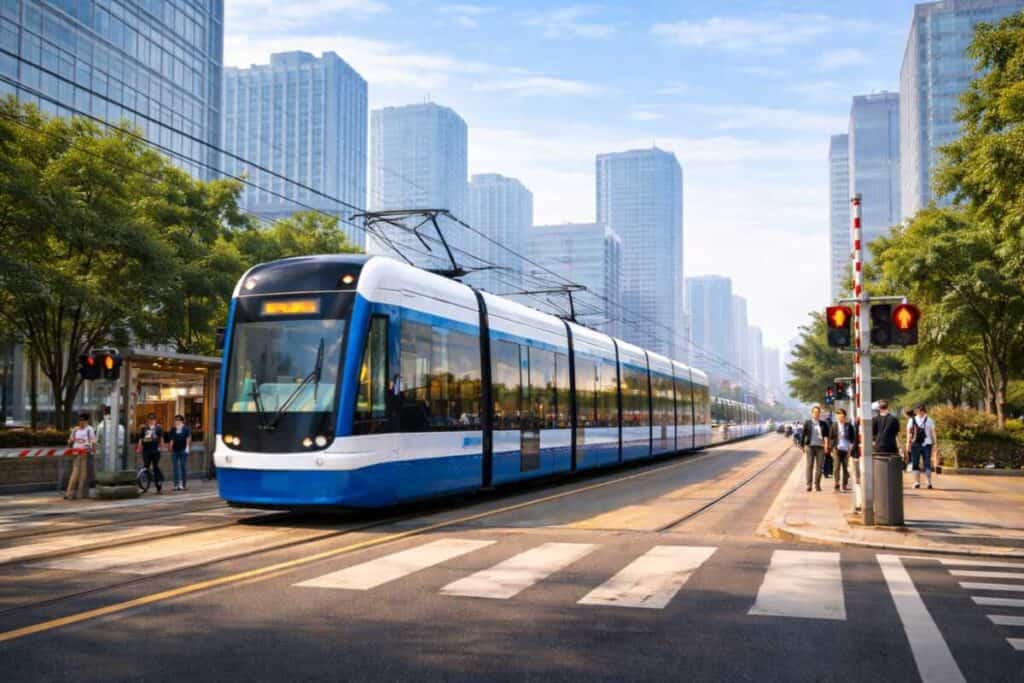
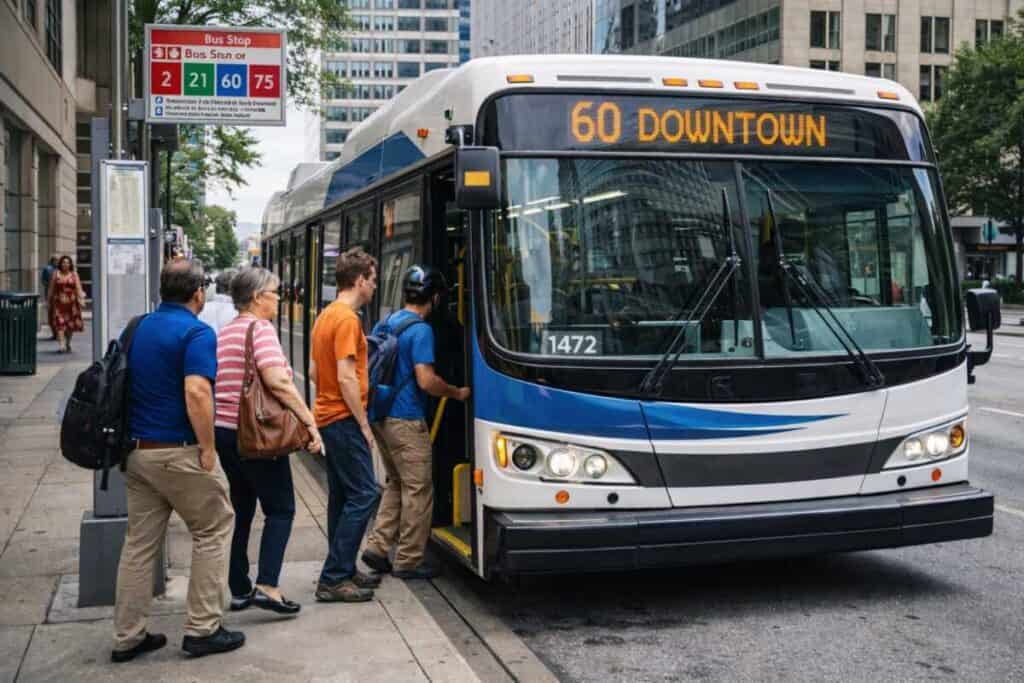
Transit litigation can arise from almost any part of a system. It may involve a light rail vehicle at a street crossing, an automated people mover (a driverless passenger shuttle) at an airport terminal, or a public transit bus making a routine stop.
The physical infrastructure is different in each case, but the core questions tend to be the same. Were the right procedures in place? Were they followed? Was the system properly maintained? Were warnings adequate? Was the operator trained for the situation they faced? Those are the questions I am retained to answer.
I work for both plaintiff and defense counsel. My opinions are formed from the evidence and the record. They do not change based on who retained me.
Transit Systems I Cover
Effective expert analysis requires genuine familiarity with each system type, not a general background in transportation. The following outlines the primary transit modes I address.
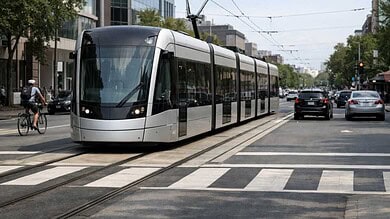
Light Rail, Streetcars, and Trams
Light rail systems operate on fixed guideways, meaning dedicated or shared tracks with a fixed route and no ability to steer around a hazard. That physical constraint shapes almost every safety and liability issue that arises.
At-grade operations bring light rail vehicles directly into contact with pedestrian crossings, signalized intersections, and mixed vehicle traffic. I examine grade crossing protection systems, signal preemption (the technology that clears traffic signals ahead of an approaching train), sight-line adequacy, and vehicle stopping distances.
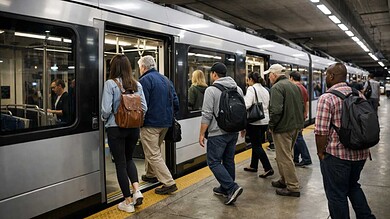
Platform interface issues are a recurring source of injury claims. These involve the gap between the train door and the platform edge, station design, how long a train dwells at a stop, and how the door systems are controlled.
Operator procedures, speed restrictions, cab signaling, and radio communications all come into play in cases involving rule violations, overspeed events, and collisions.
Streetcar and tram systems operate in tighter urban environments with more frequent pedestrian interaction. The questions around visibility, pedestrian warning, and hazard management at grade level are related to light rail but have their own distinct characteristics.
Automated People Movers and Airport Train Systems
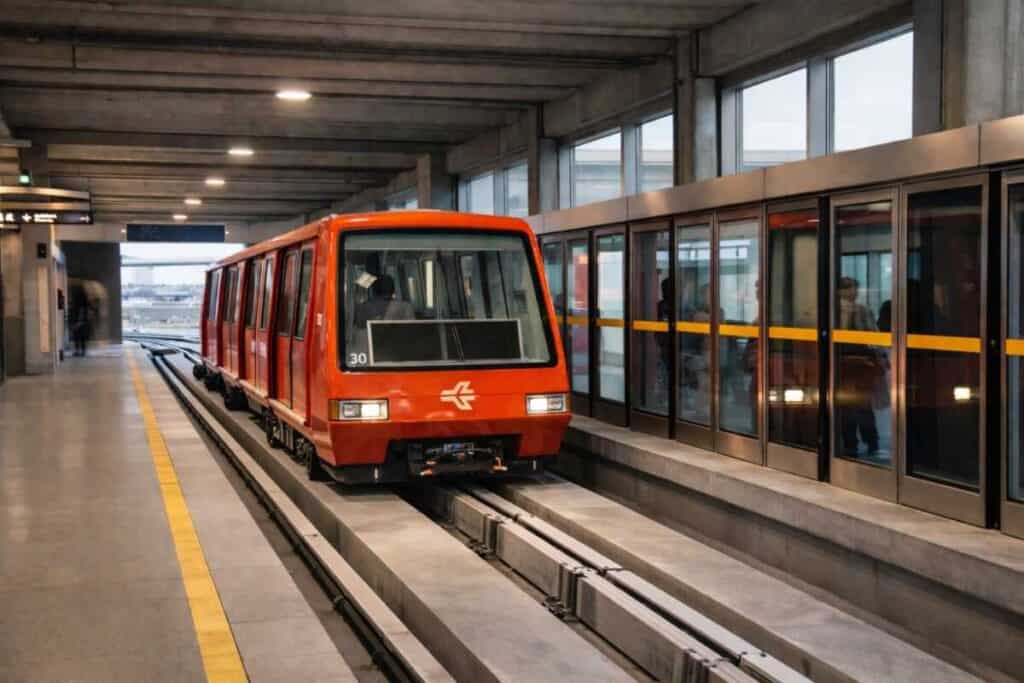
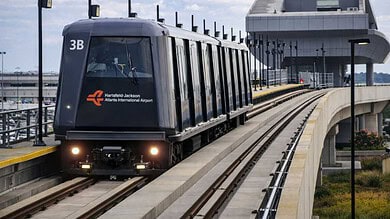
Automated people movers, commonly called APMs, are the driverless or semi-automated passenger shuttles found at airports, stadiums, and similar facilities. You may know them as plane trains or inter-terminal connectors.
The absence of an on-board operator does not simplify the safety picture. In many respects it makes it more complex, because system design, software performance, and maintenance documentation carry the weight that an operator would otherwise bear.
In APM litigation I examine platform screen doors and their interlock systems (the mechanisms that prevent doors from opening unless the train is correctly positioned and stopped), guideway condition and maintenance records, train control system performance, station design, emergency egress procedures, and the protocols that govern how the system responds to incidents.
These are specialized systems and they require someone who knows them specifically.
Transit Bus Systems and Rubber-Tired Transit Operations
Public transit buses generate more injury litigation than any other transit mode, largely because of the volume of passenger interactions and the complexity of urban street environments.
The cases I see most often involve passengers boarding or alighting, sudden braking or unexpected acceleration, door incidents, slip-and-fall injuries on or near the vehicle, operator conduct, and the adequacy of training and supervision.
ADA compliance (the requirements of the Americans with Disabilities Act as applied to transit vehicles and operations) is a consistent issue in bus litigation. It covers wheelchair ramps, kneeling functions, securement systems, and the procedures operators are required to follow when using them.
Fleet maintenance records, pre-trip inspection requirements, brake system performance data, and operator certification files are standard subjects of review. Route-specific factors, including stop placement, curb conditions, and sight-line constraints, may also be relevant depending on the facts of the case.
Types of Cases I Analyze
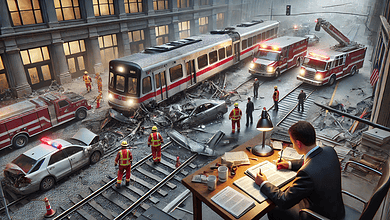
Transit systems produce a wide range of litigation. The cases most commonly referred to me include collisions between transit vehicles and other road vehicles, pedestrian fatalities and serious injury incidents, bicycle incidents at crossings, along transit corridors, and flangeway incidents and passenger injuries during boarding, riding, or alighting.
Platform and station incidents, including falls, escalator and elevator failures, and injuries caused by the gap between a train and the platform edge, are a consistent source of claims across all transit modes.
Door entrapment incidents occur across light rail, bus, and APM systems. Each mode involves different door sensing technologies and interlock logic, and the analysis is specific to the system involved.
Sudden braking and unexpected acceleration events are among the most frequently litigated transit injury claims. Standing passengers are particularly vulnerable, and I examine what the vehicle data shows about the braking event, what the operator knew, and what the agency’s procedures required in that situation.
Operator error cases, overspeed events, and rule violations are analyzed through event recorder data (the onboard systems that log speed, braking, door operations, and other functions), dispatch records, training documentation, and operating rule review.
Maintenance-related failures, including brake defects, track and guideway irregularities, failed warning devices, and infrastructure that was not inspected on schedule, give rise to both individual injury claims and broader agency safety and compliance disputes.
I also handle airport people mover incidents, construction zone and right-of-way worker safety cases, and matters involving third-party contractor conduct within transit infrastructure.
Technical Issues I Evaluate
Every case is shaped by its own facts, but certain categories of evidence appear consistently across transit litigation.
Operating rules and standard operating procedures form the baseline. They define what the agency required of its operators and maintenance personnel, and they are the first thing I review to establish the standard against which conduct will be measured.
Maintenance and inspection records tell me whether required work was done, whether known defects were addressed, and whether the vehicle or infrastructure was in the condition it should have been at the time of the incident.
Event data recorders, present in some form on most modern transit vehicles, provide speed, braking, and operational data that either supports or contradicts the accounts of what occurred. I have reviewed this data across many system types and I know what it can and cannot tell you.
CCTV footage from vehicles and fixed infrastructure is increasingly central to transit litigation. I review it carefully for what it shows, what it does not show, and whether proper preservation steps were taken after the incident.
Operator training records, including simulator hours, recertification history, and any documented performance issues, are a standard subject of discovery and one I examine in detail.
Dispatch and control center records, including radio communications, computer-aided dispatch logs (the computerized records of every communication and action logged by the control center), and supervisor contact records, can reveal what agency personnel knew and when they knew it.
Braking performance data, door and interlock system records, and track or guideway inspection reports address the mechanical and infrastructure side of a case. Signal systems and grade crossing warning devices, along with their maintenance histories, are central in collision and near-miss cases.
Underlying all of this is a human factors analysis, which is an evaluation of visibility conditions, operator workload, the adequacy of warnings, reaction time expectations, and the design of cab controls and passenger interfaces.
Human factors analysis is the bridge between technical findings and what a jury needs to understand.
Safety, Operations, and Standard of Care
Transit agencies operate under layered safety obligations, but those layers are not the same for every system type. Understanding the differences matters, particularly in cases involving automated people movers and airport train systems.
For conventional transit modes, federal oversight comes primarily from the Federal Transit Administration and its State Safety Oversight program, which sets minimum requirements for safety planning, hazard management, and incident investigation.
For systems sharing infrastructure with freight or commuter rail, Federal Railroad Administration requirements may also apply. Industry guidance from the American Public Transportation Association and the American Railway Engineering and Maintenance-of-Way Association provides a further reference for accepted practice across all modes.
When an agency has adopted APTA recommended practices or referenced AREMA standards in its own procedures, those documents become directly relevant to liability analysis regardless of whether any regulator required them to do so.
Every transit agency is also required to maintain a formal written safety document describing how it identifies, manages, and mitigates risk. That document goes by different names depending on the agency and the regulatory period.
You may encounter it as a System Safety Program Plan, a System Safety Plan, or under the current federal framework introduced in 2018, a Public Transportation Agency Safety Plan.
The title matters less than the substance. It is the agency’s written commitment to how it manages safety, and it is one of the first documents I request in any transit case.
Automated people movers and airport train systems occupy a genuinely different regulatory position, and attorneys handling APM cases need to understand this early.
Because most APMs operate on private airport property rather than public rights-of-way, they typically fall outside FTA State Safety Oversight jurisdiction and outside Federal Railroad Administration authority.
The FAA has a presence in the airport environment but does not regulate the train systems themselves in any substantive way.
Some states have enacted their own APM-specific safety requirements. Many have not. The result is that many APM systems, including some carrying very large passenger volumes through major international airports, operate under a framework that is largely self-defined.
In APM cases the governing standards come from the airport authority’s own safety program, the system manufacturer’s design and maintenance specifications, and whatever obligations were written into the operating contract.
The foundational engineering standard most APM systems are designed and procured against is ANSI/ASCE 21, published by the American Society of Civil Engineers. It covers guideway design, vehicle performance, door systems, station safety, and emergency procedures.
APTA’s APM recommended practices sit alongside it as operational guidance. Together these documents define the standard of care framework in APM cases even where no external regulator is actively enforcing it. ANSI/ASCE 21 is not always produced in discovery without a specific and informed request. Knowing to ask for it is part of what I bring to these cases.
Across all transit modes the practical question in litigation is rarely whether a dense regulatory framework was technically violated. It is whether the agency and its personnel met the obligations they set for themselves and that the industry recognizes as reasonable.
The gap between what the agency’s own rules required and what the record shows actually happened is where the most important analysis almost always lies.
In APM cases that gap can be harder to find. It is almost always there.
My Role in Litigation
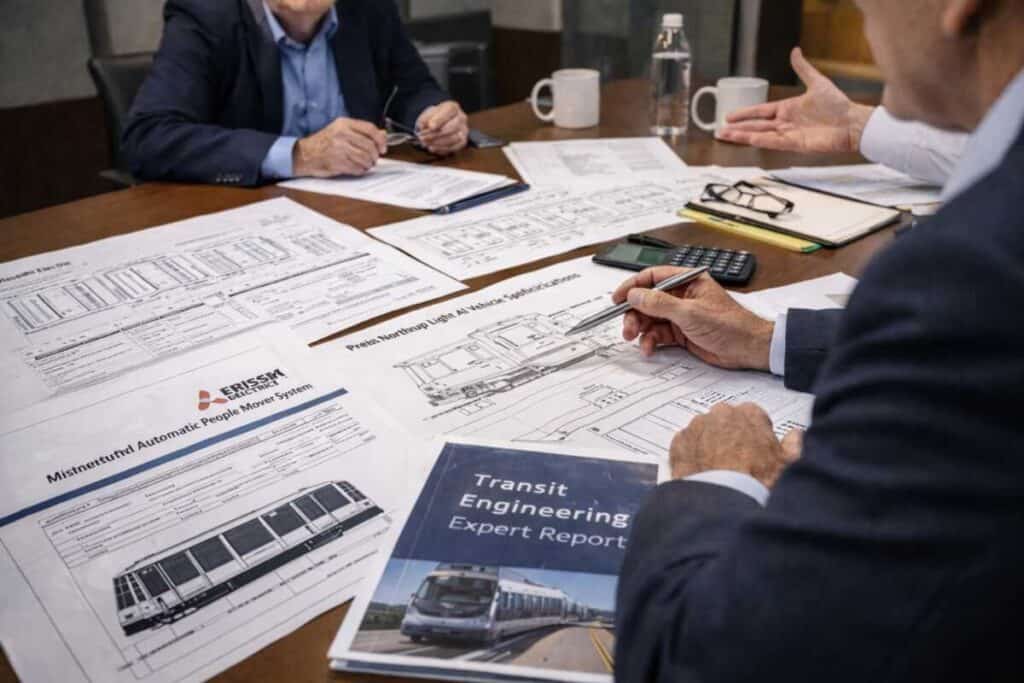
Engagement typically begins with an initial case review. I evaluate the incident description, the preliminary records, and whatever evidence is available at that stage, and I form an early assessment of the technical issues that are likely to matter.
This helps counsel understand what they are dealing with before significant discovery resources have been committed. Early engagement is where I often add the most value.
As discovery proceeds, I expand that review to include maintenance records, operating rules, training documentation, event recorder data, video evidence, and any prior incident or inspection reports that may be relevant.
I conduct site inspections where the physical condition of infrastructure, rolling stock, the geometry of a crossing or platform, or the configuration of a warning system needs to be evaluated firsthand.
Expert reports are prepared to meet applicable court requirements and are written to hold up under rigorous cross-examination. I write to explain, not to advocate.
Rebuttal reports address the opinions of opposing experts. I identify methodological weaknesses, unsupported assumptions, and conclusions that are inconsistent with the technical record.
Deposition support includes preparing counsel on the subject matter and, where necessary, providing expert deposition testimony myself.
At trial my objective is the same as throughout the case: clear, credible explanation of complex transit system issues for an audience, whether attorneys, judges, or jurors, that should not be expected to have engineering or operations expertise.
My opinions are independent. They do not shift based on who retained me, and I do not offer conclusions the record does not support.
Why Broad Transit Experience Matters
Transit litigation does not always arrive clearly labeled by mode. A case involving a light rail vehicle at an airport connector station may implicate both light rail operations and APM platform interface standards simultaneously.
A transit bus case may turn on whether the driver’s training adequately covered the specific hazard involved, and the framework for evaluating training adequacy is substantially the same across transit modes.
Attorneys handling transit injury cases benefit from an expert who understands not only the specific system involved but also the broader operational and safety culture of public transit and the principles that connect different modes.
Broad experience also means knowing where the differences are consequential. The regulatory framework for automated guideway systems is not the same as the one for transit buses. The door interlock logic on an APM is engineered to different assumptions than the door system on a light rail vehicle.
Speed restriction compliance in a light rail system is enforced through a different combination of technical controls and operator training than in a fully automated system with no on-board operator.
The value of broad experience is precisely that it allows me to draw accurate comparisons, recognize system-specific issues, and avoid applying the standards of one mode incorrectly to another.
Four decades of direct involvement across multiple system types and multiple transit agencies produces the kind of contextual understanding that a narrow specialty background cannot replicate.
How I Support Attorneys Handling Transit Cases
The attorneys who get the most from retaining me early do so before discovery disputes arise and before key records have disappeared.
I can help identify the specific categories of records that should be sought, including maintenance logs, event recorder data, training files, inspection reports, and dispatch records that agency counsel may not produce without being asked directly.
Knowing what to ask for, and knowing when something that should exist is missing, requires familiarity with how transit agencies actually document their operations.
At the pre-litigation and early discovery stage I can help counsel understand transit-specific terminology and operations, evaluate whether the agency’s conduct deviated from its own rules and from accepted industry practice, and identify the technical questions that will shape liability and causation analysis as the case develops.
When the opposing expert’s report arrives, I review it for methodological weaknesses and prepare counsel for technically informed cross-examination. I help attorneys avoid being caught off guard by engineering or operational arguments they are not positioned to challenge on their own.
I work for plaintiff’s counsel and defense counsel. What I bring to each engagement is the same: the same technical framework, the same standards, and the same obligation to follow the evidence wherever it leads.
Related Transit Expert Witness Services
This article covers transit systems litigation broadly across the principal fixed-guideway and rubber-tired modes.
For matters involving a specific system type, dedicated articles address the technical and operational issues particular to each mode in greater depth.
The Light Rail Systems Expert Witness article covers grade crossing incidents, vehicular accidents, platform interface claims, door incidents, signal system disputes, slips, trips and falls, rail-related incidents, and the specific regulatory and operational standards that apply to light rail, streetcar, and tram litigation.
The Automated People Mover Expert Witness article addresses the full range of driverless guideway systems encountered in litigation, including airport APMs, inter-terminal connectors, and the systems commonly known as plane trains or airport people movers.
That article covers door systems and interlock failures, train control performance, platform screen door incidents, guideway condition, station design, falls due to excessive jerk rates, emergency response protocols, and the ANSI/ASCE 21 standard framework that applies across these systems.
The Transit Bus Systems Expert Witness article covers public transit bus operations, vehicular accidents, passenger injury claims, ADA compliance, operator conduct, and fleet maintenance issues.
Cases that fall clearly within one mode may be best served by starting with the relevant specialized article.
Cases involving multiple modes, or where the mode classification itself is part of the dispute, are addressed through the full scope of my transit systems experience.
Transit Systems Expert Witness
Transit systems litigation is technically demanding and the quality of expert analysis matters.
An expert who has spent decades working inside these systems, not just reviewing them after the fact, is better positioned to identify what the records actually show, explain what they mean in operational terms, and withstand the scrutiny of well-prepared opposing counsel.
I bring more than 40 years of direct experience across light rail, automated people movers, airport train systems, and transit bus operations.
My analysis is independent, my opinions are evidence-based, and my reports and testimony are prepared to the standard that federal and state court proceedings require.
I am available for initial case screening, expert report preparation, rebuttal analysis, deposition support, and trial testimony.
If you are evaluating expert retention for a transit-related matter, I welcome an initial conversation about the technical issues in your case.
All initial consultations are confidential. Contact National Transit Services, LLC to discuss your case.


![Transit Expert Witness: Types or Modes of Public Transit [year]](https://lightrailexpertwitness.com/wp-content/uploads/2024/07/image-110-390x220.png)