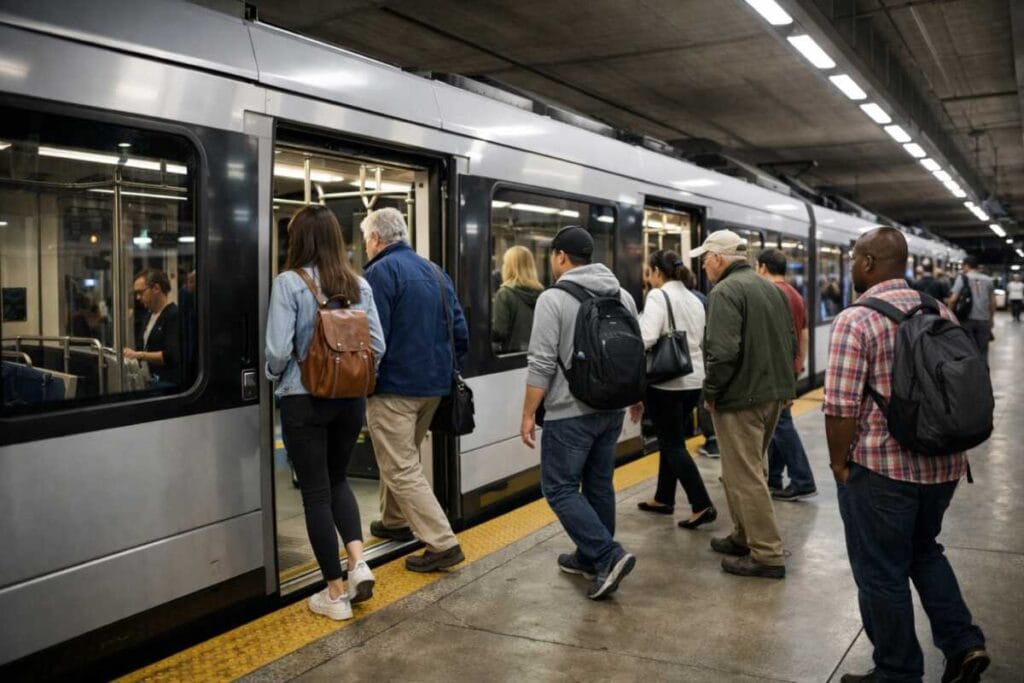
Door incidents are the most frequent source of passenger injuries across every transit mode I work in.
That is not a general observation. It is the operational reality I encountered managing streetcar and light rail systems in Tampa and Atlanta, and it is confirmed in every maintenance log I have reviewed in litigation.
Doors cycle hundreds of times every revenue day. They operate under tight scheduling pressure. And they are the point at which a passenger’s body is in closest proximity to a moving mechanical system.
When a passenger is struck by a closing door, dragged from a platform, or injured because a door opened while a vehicle was in motion, the investigation centers on two questions.
Did the door system function as designed? And if it did not, what does the maintenance record show about why it failed?
I have spent more than 41 years answering those questions across light rail, automated people mover (APM), and bus systems. The answers are almost always in the documents.
The applicable standards differ by system type. Light rail and streetcar door maintenance is measured against APTA Recommended Practice APTA RT-VIM-RP-005-02 Rev 1, Door System Periodic Inspection and Maintenance for Rail Transit Vehicles.
APM systems are governed by ANSI/ASCE/T&DI 21-21, the Automated People Mover Standards published by the American Society of Civil Engineers, which addresses door and dwell time control, platform edge protection, and the coordination of vehicle and station door systems.
Bus door systems are governed by the agency’s own maintenance program and applicable Federal Transit Administration (FTA) requirements. In every mode, the standard of care analysis begins with what the applicable framework required and what the record shows was actually done.
The documents are always the anchor.
How the incident or hazard occurs
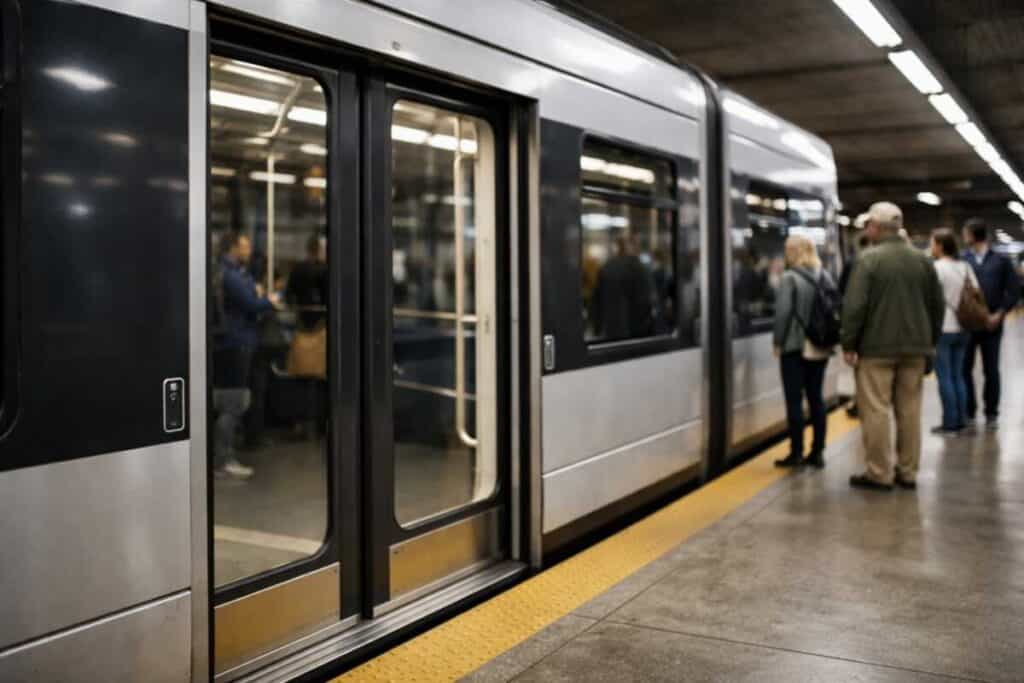
Vehicle doors across all transit modes serve the same basic function and present a similar risk profile. They must open fully to allow passenger boarding and alighting, remain open during the station dwell time, and then close and lock before the vehicle departs.
Every step in that sequence is governed by safety-critical controls. When any one of those controls degrades or fails, the conditions for a passenger injury exist.
The primary protection against passenger injury during door closing is obstruction detection. In light rail and automated people mover vehicles, sensitive edges, compressible rubber strips mounted along the leading edge of each door panel, detect contact with a passenger or object during closing and signal the door controller to interrupt the closing cycle, typically initiating a reversal or recycle sequence.
Obstruction detection may also be accomplished through monitoring of motor current or closing force, comparison of closing time against programmed parameters, or through photoelectric, infrared, microwave, or light-curtain sensing technologies.
When these systems fail to detect an obstruction, the door may continue closing without reversing. In my experience reviewing transit incidents, failure of obstruction detection systems is a common mechanism underlying door-dragging events.
Panel pushback provides secondary protection. It allows a closed and locked door panel to be manually pushed open within a defined travel range when a passenger’s clothing, bag, or limb is caught.
The force required to activate pushback is calibrated to specification during maintenance. When that calibration drifts due to deferred inspection, the secondary protection is no longer functional, even if the primary sensing appears to pass a visual check.
Traction interlocking, the circuit that prevents vehicle propulsion unless all in-service doors are confirmed closed and locked, is a separate and independent safety function.
When a short circuit, wiring fault, or logic error defeats that interlock, the vehicle can move with a door that is not properly secured.
The April 2022 death on the Massachusetts Bay Transportation Authority (MBTA) Red Line, in which a passenger was fatally dragged after his arm became caught in a closing door, was attributed by federal investigators to a short circuit that prevented the failsafe from triggering, allowing the train to depart with the passenger trapped.
That is the consequence when the traction interlock fails. It is not a rare edge case. It is the exact hazard the interlock exists to prevent.
Operational and system factors
The operational environment accelerates door system degradation in ways that a maintenance program either tracks or misses. A light rail vehicle in revenue service on a busy urban corridor may cycle each door set several hundred times per day.
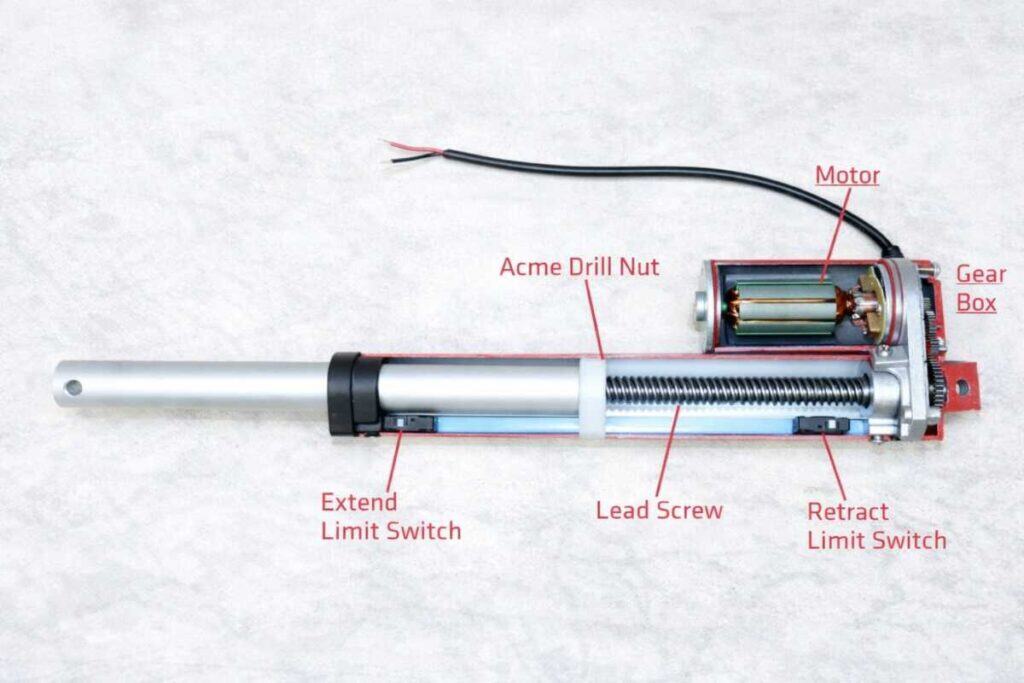
Over a maintenance interval of 30 or 60 days, that translates to thousands of cycles on every mechanical component in the door operator, meaning the drive mechanism that moves the door panels.
Lead screws, the threaded shafts that convert motor rotation into panel movement, accumulate wear at a rate directly proportional to cycle count. Sensitive edge rubber loses compliance. Limit switches fatigue. Wiring terminations loosen under vibration.
APTA RT-VIM-RP-005-02 Rev 1 requires that inspection and maintenance intervals account for operating environment, cycle history, OEM recommendations, and the agency’s own failure analysis.
When an agency extends inspection intervals beyond those parameters without documented engineering justification, it has accepted additional risk without recording its reasoning.
In litigation, that gap between the required interval and the actual interval is directly relevant to the standard of care analysis.
For APM systems, ANSI/ASCE/T&DI 21-21 requires that vehicle door opening and closure be coordinated with platform door systems where platform edge protection is provided.
Platform doors, meaning the barrier doors installed at station edges that open and close in coordination with the vehicle doors, introduce an additional layer of interlocking complexity.
When vehicle and platform door timing falls out of synchronization, passengers can be caught in the gap between the two systems during the closing sequence.
The standard requires a hazard analysis specifically addressing door closure when passengers are in the space between the vehicle and platform doors.
Whether that analysis was performed and whether the maintenance program addressed the findings are the questions I ask when I take an APM door case.
Bus door incidents follow a different operational pattern but the same documentation logic.
Bus folding doors, the accordion-style panels hinged at the center that fold inward when opened, typically rely on pneumatic actuators and control switches, which are subject to wear and misalignment.
Pre-trip inspection requirements under the agency’s maintenance program govern whether those components were checked before the vehicle entered service.
When the pre-trip log for the incident date shows no documented door system check, that omission is the starting point for the analysis.
Safety standards and system design considerations
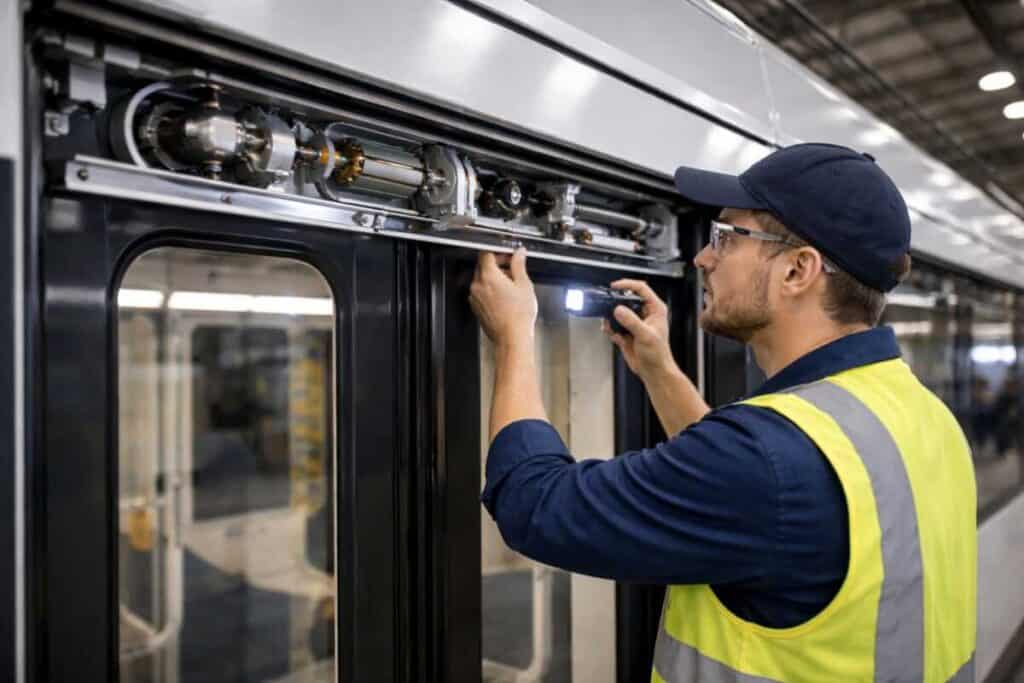
APTA RT-VIM-RP-005-02 Rev 1 is the primary APTA document governing door system inspection and maintenance on rail transit vehicles.
First published in 2002 and revised in 2015, it establishes minimum inspection requirements for all safety-critical door subsystems, including obstruction sensing, sensitive edges, panel pushback, zero speed detection, meaning the circuit that prevents door operation while the vehicle is moving, and panel position sensing.
It requires that each of these subsystems be functionally tested using calibrated go/no-go gauges and force measurement equipment, not merely visually examined.
A maintenance record in which inspection entries appear on schedule but lack the functional test documentation the standard requires tells me the inspections may have been performed at the required frequency but not to the required depth.
For APM systems, ANSI/ASCE/T&DI 21-21 is the applicable engineering standard. Section 5.2.3 of that standard governs door and dwell time control within the Automatic Train Operation (ATO) subsystem, meaning the component of the train control system responsible for programmed stopping, door control, and dwell time management.
Section 7.8 addresses vehicle doors, access, and egress requirements. Section 10.2 governs platform edge protection and the coordination requirements between platform and vehicle door systems.
When I cite this standard in an APM case, I am not interpreting it from the outside. I was engaged by the Mayor of Atlanta to conduct a comprehensive operational and compatibility assessment of the Hartsfield-Jackson Atlanta International Airport Plane Train system with full authorized access to vehicle systems, maintenance programs, and safety management practices.
I know what compliance with this standard looks like in operation.
Agencies that receive FTA funding and operate fixed guideway systems subject to State Safety Oversight under 49 CFR Part 674 are required to maintain a Public Transportation Agency Safety Plan (PTASP), the formal document that describes how the agency identifies and manages safety risk.
A PTASP that does not identify door obstruction sensing degradation as a monitored hazard, or that contains no corrective action protocol for sensitive edge compliance failures, reflects a safety management program that was not designed for the systems it was operating.
That gap between what the PTASP required and what the maintenance record shows is where the standard-of-care analysis centers.
Most airport APM systems operate under FAA airport certification requirements under 14 CFR Part 139, not under FTA State Safety Oversight.
For those systems, there is no independent State Safety Oversight agency auditing the safety plan. The standard of care comes from the agency’s own safety program, the operating and maintenance contract, and ANSI/ASCE/T&DI 21-21.
That does not reduce the obligation. It means the agency’s own documents define the standard against which its performance is measured.
Evidence reviewed in transit accident investigations

Door incident litigation is document-intensive. The records that matter most are almost always held by the agency and are almost always producible in discovery.
The periodic inspection log for the incident vehicle is the starting point.
I review the complete inspection record covering at minimum the 90 days before the incident, looking for whether inspections were performed on the required schedule, whether check sheets were completed and signed at each inspection step, whether deficiencies were recorded, and whether those deficiencies were closed with documented verification of repair completion.
A corrective maintenance work order that was opened and left without a signed repair verification is a deficiency that was identified and not resolved. Five such entries on a single door system in the 90 days before an incident tell a specific story.
The microprocessor fault data log, meaning the onboard computer record of door control system fault codes generated during vehicle operation, is frequently overlooked in early discovery requests. I request it in every door case.
Fault codes generated in the weeks before an incident establish when the door control system first detected an anomaly.
A fault code pattern that predates the incident by three weeks tells me the degradation was developing, the system was detecting it, and the question is what the maintenance program did in response. That gap between detection and correction is where the opinion forms.
Onboard camera footage documents the incident itself, the behavior of the door panel, and the station environment at the moment of the event.
Event recorder data, meaning the vehicle’s onboard data log of speed, door status, and interlock states at each second of operation, establishes whether the vehicle was in motion at the time the door opened or closed, and whether the traction interlock was functioning as required. Both are preserved in the formal litigation hold.
Operator inspection records, the pre-trip and post-trip vehicle inspection logs completed by the train operator or bus driver, are relevant when door anomalies were reported through that channel.
An operator-reported door problem that appears in the inspection log but does not generate a corresponding corrective maintenance work order represents a breakdown in the maintenance intake process. That breakdown is itself a finding.
For APM systems, I also review the central control center operational log, which records all alarms, door status alerts, and operator interventions during the period leading up to the incident.
ANSI/ASCE/T&DI 21-21 requires that the Automatic Train Supervision (ATS) system, meaning the subsystem that monitors overall APM system operation and provides the interface between the system and control operators, log status and performance data, including door alarm events.
That log is the APM equivalent of the fault data record.
Expert analysis in these incidents
My analysis in a door incident case begins with the documents and works outward from there. I do not start with a conclusion. I start with what the record shows and let the engineering interpretation follow from that.
The first question I answer is whether the maintenance program was designed and executed in accordance with the applicable standard.
For light rail, that is APTA RT-VIM-RP-005-02 Rev 1 and the agency’s own maintenance manual.
For APM systems, it is ANSI/ASCE/T&DI 21-21 and the operating and maintenance contract.
For bus systems, it is the agency’s preventive maintenance schedule and FTA requirements.
I compare the actual inspection intervals against the required intervals, verify that functional tests were performed and not merely noted as complete, and confirm that each safety-critical subsystem received the specific tests the standard requires.
The second question is what the fault data log shows about the timeline of degradation. Sensitive edge compliance and obstruction sensing calibration do not fail instantaneously. They degrade over a maintenance cycle.
If the fault log reflects door sensor anomalies beginning in the weeks before the incident, I can establish that the degradation was present and detectable before the event.
The engineering inference is transparent: the system recorded the problem before the incident date. The question is whether the maintenance program responded proportionately.
The third question is whether the corrective maintenance record reflects a response that matches what the fault log shows.
The core finding is a gap between what the fault log recorded and what the corrective maintenance log documents as repaired and verified. Monitoring a known fault is not the same as fixing it.
I managed the startup, operations, and maintenance of the Tampa streetcar system for six years as Manager of Streetcar Services at Hillsborough Area Regional Transit Authority.
When I conduct a site inspection of a door system following an incident, I am not reviewing an unfamiliar environment. I know what a properly maintained door system looks like at inspection, and I know what the record should contain when it has been correctly maintained.
When attorneys engage an expert witness

Attorneys representing plaintiffs in transit door cases typically engage me when they need to establish whether the agency’s maintenance practices met the applicable standard of care, and whether a failure in that program contributed to the incident.
That analysis requires direct operational experience with the specific type of system involved, familiarity with the applicable maintenance standards, and the ability to read and interpret the records that agencies actually produce in discovery. General engineering credentials are not sufficient. The analysis requires someone who has run these systems.
Defense counsel engages me when they need an independent assessment of whether the maintenance record supports the agency’s position that the door system was properly maintained and functioning within specification at the time of the incident. I approach that analysis the same way I approach every engagement: from the documents outward, not from a conclusion backward.
Cases where expert analysis is typically necessary include incidents in which a passenger was struck by a closing door and claims the obstruction sensing system failed to reverse; incidents in which a passenger was dragged because the traction interlock failed to prevent vehicle movement; incidents in which a door opened while the vehicle was in motion; and cases where the agency contends the incident was caused by passenger behavior rather than a system deficiency.
In every one of those scenarios, the answer is in the maintenance and operational records. The question is whether the attorney has an expert who can find it and explain it.
If you are evaluating a transit door injury case and need to understand what the maintenance record shows and what it means, I am available for a confidential consultation.
Frequently asked questions
What documents should I request first in a transit door injury case?
Start with the periodic inspection check sheets for the incident vehicle covering the 90 days before the event, the corrective maintenance work order history for the specific door involved, the microprocessor fault data log for the vehicle, and the pre-trip inspection records for the days immediately preceding the incident.
For APM cases, add the central control operational log and any alarm records for the relevant period. The training records for technicians who performed door system inspections are also relevant and are frequently overlooked in initial discovery requests.
Does it matter whether the door system appeared to pass its last inspection?
It depends entirely on what that inspection documented. APTA RT-VIM-RP-005-02 Rev 1 requires functional testing of obstruction sensing and sensitive edges using calibrated gauges, not visual observation.
A maintenance record that shows an inspection was completed on schedule but contains no functional test documentation tells me the inspection may not have been performed to the standard the agency was required to follow. Passed and properly tested are not the same thing.
How do APM door cases differ from light rail door cases?
The governing standard differs and the system architecture differs. APM systems add a layer of complexity in the coordination between vehicle doors and platform edge barriers, which are governed by ANSI/ASCE/T&DI 21-21.
Most airport APM systems also operate outside the FTA State Safety Oversight, so there is no independent agency auditing the safety plan. The standard of care analysis relies more heavily on the agency’s own maintenance program and operating contract. The documents are different. The analytical method is the same.
Can passenger behavior defeat an otherwise properly maintained door system?
Passenger behavior and system condition are not mutually exclusive explanations. A properly maintained door system with functioning obstruction sensing is specifically designed to reverse when a passenger places an object or body part in the closing path.
If the system reversed as designed, the incident may reflect a condition outside the system’s design parameters. If the system failed to reverse when it should have, the maintenance record becomes the central issue, regardless of what the passenger was doing.
The engineering question is whether the system performed as designed. The maintenance record answers that question.