Bicycle Accidents Involving Light Rail Tracks: Flangeway Gap & Expert Investigation

Light rail and streetcar systems that operate in mixed street traffic share their right-of-way with cyclists in cities across the United States and around the world.
Where that sharing occurs, the embedded rail creates a specific and predictable hazard that has injured cyclists in cities that have deployed this technology.
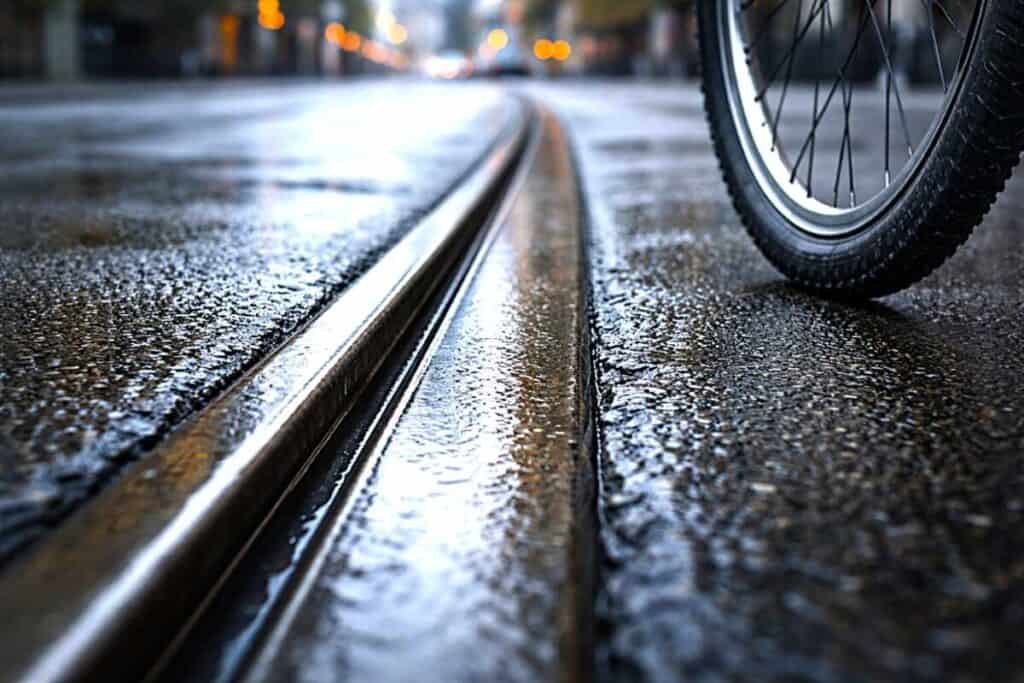
The flangeway gap, the narrow slot in the road surface along the inside of each rail that allows the streetcar’s wheel flange to pass through as the vehicle travels, is wide enough and deep enough to interact with many bicycle tires in ways that produce sudden, violent destabilizing of riders.
The rider typically has no immediate warning and no ability to recover.
I have worked in and around embedded rail systems for more than four decades. I have managed the Tampa streetcar system, overseen safety certification for the DC Streetcar, and consulted on embedded track design in multiple jurisdictions.
The geometry of a flangeway gap is not an obscure engineering detail. It is a known and documented hazard, and the question in litigation is almost always whether the agency or responsible party recognized that hazard, evaluated it, and implemented the required mitigation measures.
That analysis requires someone who understands both the engineering of embedded track and the operational framework of the transit system involved.
How the Incident or Hazard Occurs
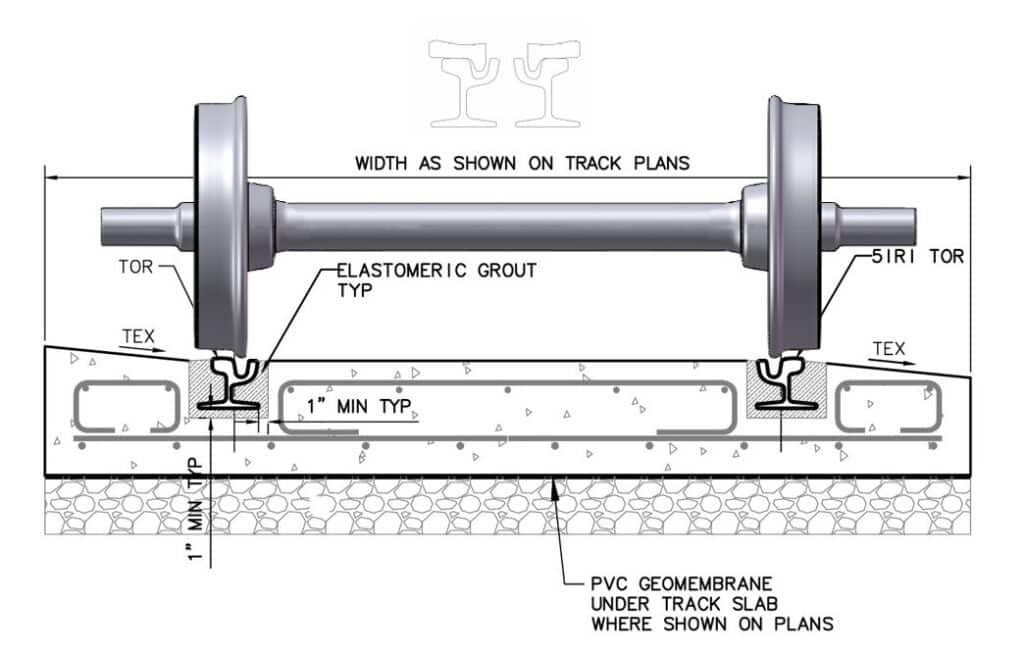
The flangeway gap is an intentional feature of embedded rail design.
The steel rail must protrude slightly above or sit flush with the road surface to support the streetcar’s wheels, and the wheel flange, the inner lip of the rail wheel that keeps the vehicle on the track, must have clearance to run below the road surface level.
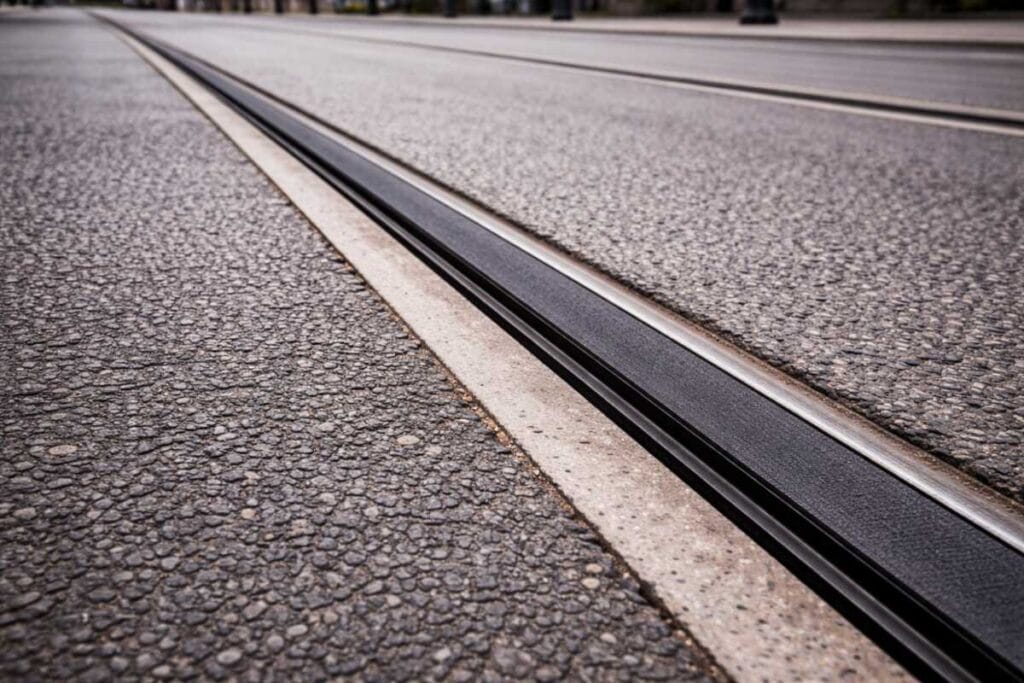
The flangeway gap typically ranges from approximately 1.5 to 2.25 inches in width in U.S. light rail and streetcar systems, with depth governed by the wheel flange profile and required clearance, generally on the order of about 1 to 1.5 inches. This continuous groove along the rail presents two distinct failure modes for bicycle tires.
Two primary failure modes arise from the geometry of the flangeway. The first is deflection: when a bicycle tire enters the gap at an oblique angle, and the width is sufficient to accept the tire, contact with the rail face imposes a lateral force that redirects the wheel, causing an immediate and uncontrollable deviation from the rider’s intended path.
The second is entrapment: when the tire width closely matches the flangeway width, the tire can become wedged between the opposing rail faces, abruptly arresting rotation and projecting the rider forward.
Both mechanisms are exacerbated by reduced tire–surface friction at the rail interface, including wet conditions or the presence of low-friction contaminants such as water, oil, or roadway residues, sometimes referred to in rail operations as friction modifiers, which increase the likelihood of slip, reduce corrective control, and promote full engagement of the tire within the flangeway.
Both mechanisms typically produce crashes that generally occur faster than any rider can respond.
The angle at which a cyclist crosses the track is a central factor in whether contact with the flangeway gap results in a crash. A crossing at or near 90 degrees minimizes the length of contact between the tire and the gap.
A crossing at an acute angle, or travel parallel to the rail, maximizes the opportunity for the tire to follow the gap for a distance before deflection or entrapment occurs.
In dense urban environments, cyclists often do not maintain a safe crossing angle because traffic conditions, lane geometry, and intersection design tend to guide them into parallel or shallow-angle paths relative to the track.
Operational and System Factors
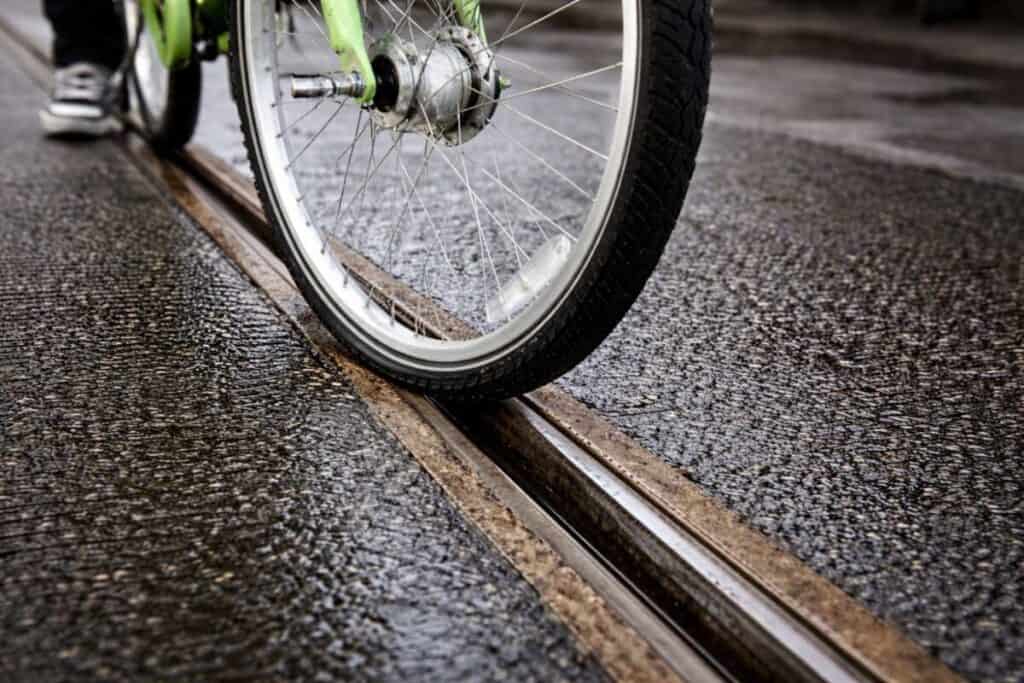
The distribution of bicycle accidents on light rail tracks is not random.
Crashes concentrate at predictable locations: intersections where bicycle lanes cross track alignments at acute angles, corridors where bicycle lanes run parallel to embedded rail for extended distances, locations where the track alignment transitions from exclusive right-of-way to mixed street running, and areas around transit stops where cyclists and boarding passengers share limited pavement space.
I have looked at enough of these locations to know that the crash pattern is usually telling you something specific about the relationship between the track geometry and the bicycle infrastructure at that point.
Lane design and resultant signage is a primary operational factor.
The Manual on Uniform Traffic Control Devices (MUTCD), the federal standard governing traffic control devices, addresses warning signs and markings at railroad and light rail crossings but does not provide specific design guidance for bicycle crossing angles.
Guidance recommending that bicycle crossings occur as close to perpendicular as practicable is instead found in sources such as the American Association of State Highway and Transportation Officials (AASHTO) Guide for the Development of Bicycle Facilities and other roadway design standards.
Where bicycle lanes run alongside embedded rail rather than crossing it, the MUTCD provides no specific design guidance for that condition. That gap in guidance does not eliminate the obligation to design and educate for cyclist safety.
It places responsibility on the agency and the design team to evaluate the specific hazard and determine what mitigation is appropriate.
Maintenance condition of the flangeway gap also matters operationally.
Over time, the gap can widen due to rail or concrete wear, concrete spalling, settlement, or deterioration of the surrounding pavement.
A gap that was within an acceptable dimensional range at construction may have migrated to a dimension that increases the risk of tire entrapment.
Maintenance records showing the last documented inspection of gap dimensions, the method used to measure them, and any corrective action taken are documents I look for in every case involving embedded track.
When those records do not exist, that absence is itself a finding.
Safety Standards and System Design Considerations
Transit agencies that receive Federal Transit Administration (FTA) funding and operate fixed guideway systems subject to State Safety Oversight under 49 CFR Part 674 are required to maintain a Public Transportation Agency Safety Plan (PTASP), the formal document describing how the agency identifies and manages safety risk across its system.
The PTASP framework requires agencies to identify hazards, assess risk, and implement corrective actions where risk exceeds acceptable thresholds.
A flangeway gap condition that has produced prior incidents or complaints, or that is located adjacent to bicycle infrastructure, represents exactly the kind of hazard that belongs in a systematic hazard identification and mitigation program.
When it does not appear there, that is a gap in the safety management process that an attorney needs to understand.
The American Railway Engineering and Maintenance-of-Way Association (AREMA) provides technical guidance on track geometry and rail condition that is relevant in cases involving embedded track condition and maintenance.
Track inspection programs, dimensional tolerances for rail components, and maintenance documentation requirements all have a basis in industry practice that AREMA frameworks help establish.
For streetcar and light rail systems, the relevant APTA guideline documents, including the Modern Streetcar Vehicle Guideline APTA RT-ST-GL-001-13, a document I contributed to, address vehicle clearance requirements that interact directly with flangeway gap geometry.
When that standard is cited in litigation, I do not need to interpret it from the outside. I contributed to its development.
Compressible rubber flangeway filler, a product designed to fill the gap with a material that compresses under the weight of a streetcar’s wheel but provides a more continuous surface for cyclists and pedestrians, is sometimes cited as a readily available mitigation.
That claim does not hold up under scrutiny.
I have researched the deployment record and have not identified a successful installation on revenue passenger-carrying light rail, streetcar, tramway, or trolley track. There are isolated examples on heavy freight railroad track, where substantially greater axle loads may compress, deform, or degrade the filler material sufficiently for it to function.
Light rail and streetcar vehicles do not generate comparable axle loads. As a result, the filler does not reliably compress under a light rail wheel flange. Freeze–thaw conditions introduce an additional operational concern: water can infiltrate the filler material, freeze, and expand, leading to solidification within the flangeway. This condition would likely alter the wheel rail interface and could result in derailment.
A party that argues flangeway filler is a practical mitigation and should have implemented needs to identify where it has actually worked on a revenue service light rail track. I have not found that evidence.
When the paper record is examined carefully, the technology exists in concept and in a growing number of experiments and tightly controlled trials. It does not exist as a validated solution for the systems in which these bicycle issues occur.
Public Awareness, Education, and the Role of Safety Campaigns
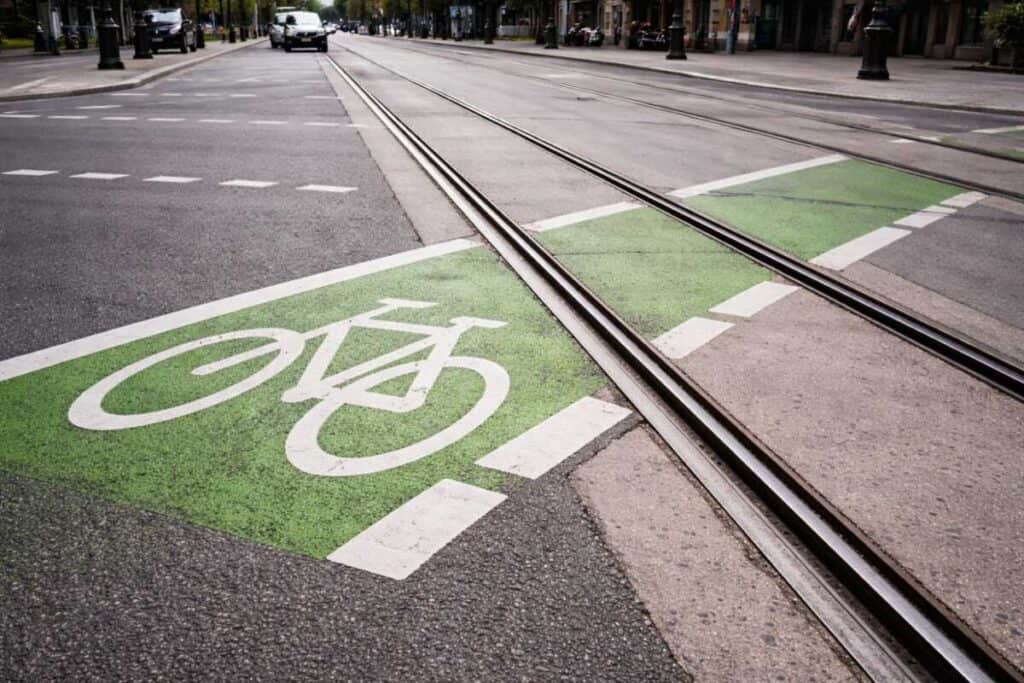
Because flangeway filler has not proven viable on revenue-light rail track, design and public awareness and education have emerged as primary mitigation tools for transit agencies operating streetcar and light rail systems in mixed traffic.
When I review a case, one of the first things I look for is what the agency actually did to put cyclists and other road users on notice of the hazard. A documented, sustained, and multi-channel awareness program is meaningful evidence.
An agency that conducted a serious campaign has a different record than one that posted a single sign and considered the matter closed.
The awareness programs I have seen in better-run systems are not passive. They involve coordinated efforts across multiple channels and audiences.
Transit agencies have engaged directly with local bicycle clubs and cycling advocacy organizations, conducted in-person training sessions, distributed printed safety materials, and developed dedicated web pages explaining how to navigate safely around embedded rail.
Some systems have produced video content and run it across social media platforms on an ongoing basis.
The Cincinnati streetcar system, for example, documented a public outreach campaign that included traditional media, social media, printed brochures, and organized bicycle safety clinics conducted in partnership with local cycling groups.
That kind of layered effort is what a genuine awareness program looks like. It leaves a documentary record that can be examined and evaluated.
Public meetings and community presentations are another component I look for.
Agencies that engaged neighborhood groups, business improvement districts, and transit advisory committees on the subject of cyclist safety near embedded rail have created a record showing the hazard was taken seriously at an organizational level.
Those meeting minutes, presentation materials, and attendance records become relevant documents in litigation. They show when the agency acknowledged the issue, what it communicated publicly, and how broadly it distributed that information.
Operation Lifesaver, the national rail safety education organization originally established to address grade crossing incidents involving highway vehicles, pedestrians, and cyclists, runs campaigns that are directly relevant to this hazard.
The physical risk that the embedded railroad track creates for a cyclist is the same whether a freight locomotive or a streetcar runs on that rail. The geometry of the flangeway, the behavior of a bicycle tire at an acute crossing angle, and the consequences of entrapment do not change soley based on the weight of the vehicle using the track.
Operation Lifesaver’s messaging on how cyclists should approach and cross rail embedded in city streets has been distributed continuously through social media and traditional media channels. That material has been in public circulation for years. Its existence is part of the general awareness environment in which these incidents occur.
When I am retained in a case involving a bicycle accident on light rail or streetcar track, the public awareness record is one of the first things I examine.
I want to know whether the agency had an active program at the time of the incident, what form it took, how long it had been running, and whether it reached the communities and user groups most likely to encounter the hazard.
That means looking for documented evidence: meeting minutes, campaign materials, social media archives, partnership agreements with cycling organizations, records of safety clinics conducted, and any communications distributed to the public specifically addressing the flangeway hazard.
A program that existed only on paper, or that ran briefly at system opening and was never sustained, tells a different story than one with years of continuous documented activity.
In litigation, the awareness record cuts both ways. For an agency that built and sustained a genuine program, the record supports the position that it met its obligation to inform the public of a known hazard and provide guidance on how to navigate it safely.
For an agency whose awareness efforts were minimal, inconsistent, or undocumented, the absence of that record is itself a finding. And for the cyclist, the question of what information was available, through what channels, and whether it was reasonably accessible given the rider’s familiarity with the route and the system, is a factual question the record answers.
My role is to evaluate what the record shows, not to decide in advance what it means.
Evidence Reviewed in Transit Accident Investigations
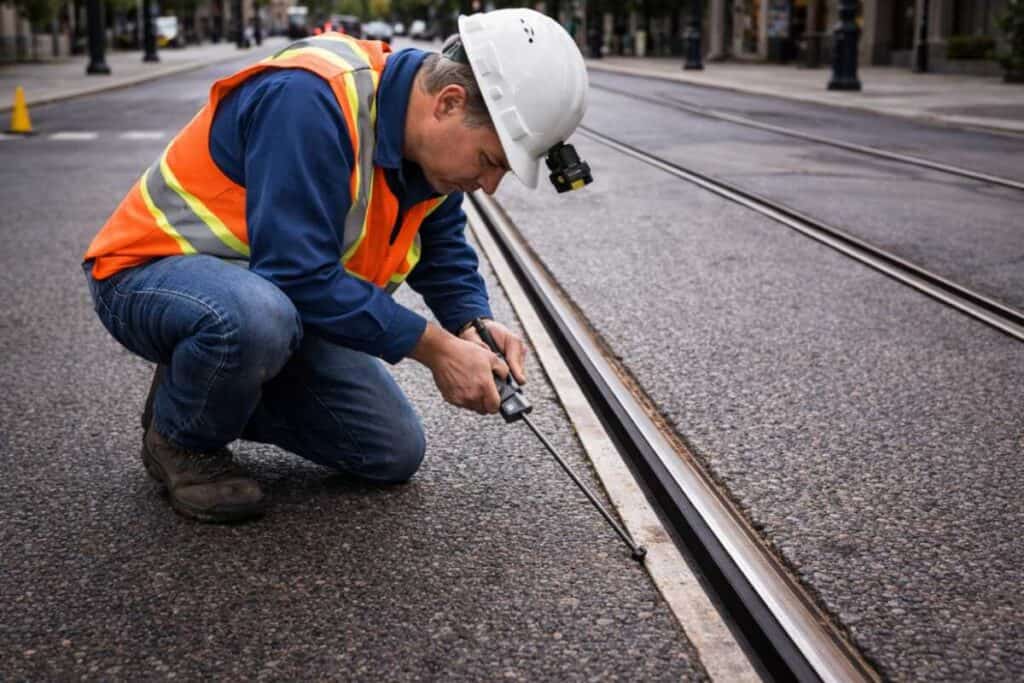
When I am retained in a case involving bicycle accidents on light rail tracks, I start with the physical record of the track itself at the location of the crash. That means track inspection records, gap dimension measurements documented in maintenance logs, and any prior incident reports involving the same track segment or the same type of incident.
If the agency has been measuring flangeway gap dimensions as part of its routine maintenance program, those records will either show that the gap was within tolerance or they will show it was not. If the agency was not measuring the dimensions at all, that tells me something about how seriously it was managing this hazard.
Onboard camera footage from the streetcar or light rail vehicle, along with general city street camera footage, can show conditions at the crash location at or near the time of the incident.
Traffic camera footage, where it exists, can capture the crash sequence and the approach path of the cyclist. I review both when they are available. They document what the record cannot always describe adequately: what the cyclist was doing, what the track looked like, and what the environmental conditions were at the time.
Witness statements and police reports document the immediate post-crash environment and initial observations about the gap condition.
Design documents and as-built drawings establish the track and other infrastructure dimensions when the system was constructed. Change orders, paving records, and utility work permits document any work done in the track zone after original construction.
Regular operational wear, pavement settlement, utility cuts, and resurfacing work can all alter the geometry of the gap at the road surface. When a gap is outside dimensional tolerance, the question is how it got there and how long it had been out of tolerance. The documentary record usually contains the answer.
Maintenance work orders, corrective action logs, and inspection documentation are reviewed against the agency’s own stated maintenance standards.
Every agency that operates embedded track has maintenance procedures. Those procedures either address flangeway gap inspection and dimensional control or they do not.
When they do, the question is whether those procedures were being followed. When they do not, the question is why not.
Expert Analysis in These Incidents
My analysis in bicycle accidents involving light rail tracks begins with the physical environment and works outward to the operational and management record.
I may measure or review measurements of the flangeway gap at the crash location, compare those dimensions against the applicable design and maintenance standards, and assess whether the geometry at that point was consistent with the configuration the agency was supposed to maintain.
Gap dimensions outside tolerance do not occur by accident. They develop over time, and someone was responsible for documenting them.
I evaluate the bicycle infrastructure design relative to the track alignment.
Where a bicycle lane runs alongside embedded rail, I assess whether the design required cyclists to travel in close proximity to the gap for any extended distance, whether warning signs were posted and adequately placed, and whether the crossing geometry at intersections was consistent with guidance on minimizing acute-angle track crossings.
The MUTCD framework governs much of this analysis, but the agency’s own design documents and the traffic engineering record for the corridor also matter. What did the design team know about the hazard, when did they know it, and what decisions did they make?
Accident reconstruction is part of this work. I review the physical evidence from the crash, the cyclist’s reported trajectory, the condition of the bicycle, and any documented evidence of tire contact with the gap.
Crash dynamics in flangeway entrapment incidents are relatively predictable: the tire contacts the gap, either deflection or entrapment occurs, and the rider goes down.
The question reconstruction answers is whether the gap geometry was consistent with producing that outcome, and whether the evidence of the bicycle and the crash scene is consistent with that mechanism.
Where the physical evidence points to maintenance failures, safety management breakdowns, or questions of organizational responsibility, those dimensions of the case require a separate and deeper analysis, which I address in my light rail bicycle accident analysis.
The management record matters as much as the physical evidence. The FTA’s hazard management framework requires agencies to identify hazards, assess their severity and probability, apply mitigations, and document the entire process.
A well-run system produces a paper trail showing exactly that sequence. I have reviewed systems where that record is complete and the agency’s position is well-supported.
I have also reviewed systems where the record is thin, inconsistent, or absent. The record determines my opinion, not the identity of the party that retained me.
I work for plaintiffs and defendants. What I bring to either side is the same analysis.
When Attorneys Engage an Expert Witness
Attorneys handling cases involving bicycle accidents on light rail tracks typically need an expert who can bridge two distinct bodies of knowledge: the engineering of embedded track and flangeway gap geometry, and the operational and safety management framework that governs how a transit agency is supposed to identify and address hazards in its system.
Those are not the same expertise, and cases that involve both dimensions require someone who has worked in both domains. My work in this area is outlined in my role as a transit systems expert witness, where I focus specifically on embedded rail systems, safety management frameworks, and infrastructure-related incident analysis.
Expert retention is warranted when the case involves questions about whether the flangeway gap at the crash location was within dimensional tolerance, whether the agency’s maintenance program addressed gap inspection, whether the bicycle infrastructure design placed cyclists in unreasonable proximity to the track, whether warning signage was adequate, or whether the agency had prior notice of similar incidents at the same location.
Each of those questions requires technical analysis grounded in the applicable standards and the specific documentary record of the system involved.
I am available to review the record, conduct site inspections where warranted, and provide opinions on liability issues in these cases. That conversation is confidential. I do not promise outcomes. I evaluate the evidence.
Where the facts of a case require technical evaluation of flangeway geometry, maintenance history, or safety management practices, an early review of the available record can clarify the key issues.
If you are evaluating a potential case or need an independent technical opinion, you can request a case review or consultation to discuss the specific circumstances involved.
Frequently Asked Questions
What makes flangeway gap cases different from other bicycle accident cases?
The physics of the incident are distinct. In a typical bicycle crash, the rider has some ability to respond to a developing hazard. Flangeway gap entrapment or deflection happens in a fraction of a second. The front wheel is redirected or stopped before the rider can react.
That suddenness matters in causation analysis, and it also frames the foreseeability question: the agency knows exactly what its track looks like and exactly what happens when a bicycle tire contacts it. The hazard is not unpredictable. It is engineered into the infrastructure.
Is a flangeway gap always a defect if a crash occurs?
Not necessarily. The question is whether the gap dimension at the crash location was within the dimensional range established by the applicable design and maintenance standards for that system, and whether the gap was located in a context where cyclists were expected to travel parallel or at acute angles to the rail.
A gap that meets dimensional standards in a well-designed corridor is a different situation than one that is outside tolerance, adjacent to an unwarned bicycle lane, with no documented inspection history. The record determines the analysis.
What evidence should attorneys preserve immediately after one of these crashes?
Photograph and document the track condition at the exact crash location as quickly as possible. Document the gap width and depth, the condition of the surrounding pavement, the bicycle lane markings, and any signage.
Track dimensions can change with maintenance activities, pavement work, or seasonal effects. The condition at the time of the crash is what matters, and that condition can be altered or obscured.
A site inspection by an expert witness early in the case can preserve findings that will not be available later.
Does it matter whether the cyclist was experienced or knew about the hazard?
It can be relevant, but it is not determinative.
A cyclist’s familiarity with a route, awareness of embedded rail, and operational choices may be considered in the allocation of responsibility under comparative fault principles. However, those factors do not eliminate the agency’s obligation to design, maintain, and operate infrastructure that is reasonably safe for foreseeable users, including cyclists who may be unfamiliar with the location.
A rider who regularly uses a corridor may have greater awareness of track alignment and associated risks than a first-time user, and that difference may be considered in evaluating conduct. At the same time, hazard analysis frameworks for rail systems recognize that user behavior is only one component of the risk profile.
My analysis considers the actions of both the agency and the rider, as well as the available record. Each is evaluated against applicable standards and foreseeable conditions.